
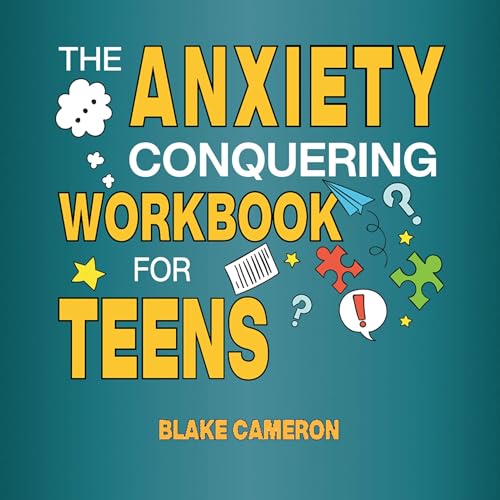
The Anxiety Conquering Workbook for Teens is a self-help book by Blake Cameron, a psychologist and motivational speaker. The book aims to help teenagers cope with their anxieties and phobias, and develop a positive mindset and attitude. The book is full of useful information and practical exercises that can help readers overcome their fears and achieve their goals.
However, the book has some drawbacks. It is written in a style that is more academic than casual, which may not appeal to the teenage audience. The book also lacks stories, examples, and images that could make it more relatable and engaging for the young readers. I find it hard to believe that a teenager from the current generations, with an attention span of around 3 minutes and who is used to learn from short videos on YouTube or TikTok, will take the time to read a book like this and apply the exercises. The book may be more suitable for professionals, parents, or teachers who want to understand and help teenagers with their fears, rather than for the teenagers themselves.
The book is divided into four parts. The first part explains the nature and causes of fear, and how it affects our thoughts, feelings, and behaviors. The second part introduces the concept of dialectical-behavioral therapy (DBT), a psychological approach that helps people change their negative thoughts and beliefs, and replace them with more realistic and positive ones. The third part provides a step-by-step guide on how to apply DBT techniques to various types of fears, such as social anxiety, panic attacks, phobias, and obsessive-compulsive disorder. The fourth part offers some tips and advice on how to maintain the progress and prevent relapse.
The book is well-researched and evidence-based, and the author draws from his own experience and expertise as a psychologist. The book provides clear explanations and examples of the DBT concepts and methods, and the exercises are easy to follow and implement. The book also includes some self-assessment tools and worksheets that can help readers track their progress and evaluate their results.
However, the book is not very engaging or entertaining for the teenage readers. The book uses a lot of technical terms and jargon, and the tone is more formal than friendly. The book also does not include enough stories or anecdotes that could illustrate the points and make them more memorable. The book also does not include enough images or graphics that could break the monotony of the text and make it more appealing. I’m concerned it may be too boring or intimidating for some teenagers, who may prefer a more interactive and fun way of learning.
The book is a valuable resource for anyone who wants to learn more about anxiety and how to overcome it, but it may not be the best choice for the teenage audience. It could be improved by adding more stories, examples, and images that could make it more relevant and interesting for the readers. The author could also use a more conversational and humorous tone that could make the readers feel more comfortable and motivated. So, the workbook may be more effective if it targets a different audience, such as adults or professionals, who may appreciate the book’s depth and rigor.
Overall, I would give this book a rating of 4 out of 5 stars. I liked the book’s content and exercises, but I did not like the book’s style and presentation. I would recommend this book to anyone who is interested in anxiety and DBT, but I would not recommend it to teenagers who are looking for a fun and easy way of dealing with their fears. The book is a good book, but it may not be the right book for the target audience indicated by the author. It would maybe be advisable to change the audience to teachers, parents, psychiatrists, people who can and wish to enforce this kind of exercises to troubled teenagers. Just my 5 cents into this, take is as an opinion, not a specialized review.
If you enjoy my work, you can support me by buying me a coffee or one of my books. ☕📚
 Ink And Reason